Why Does Vietnam’s Climate Vary So Much by Region?
Vietnam’s climate is one of the most varied in Southeast Asia. Stretching over 1,600 kilometers from north to south, the country spans multiple climate zones — meaning the weather in Hanoi can be completely different from Ho Chi Minh City at the same time of year. Understanding these regional differences is key to planning a trip that matches the weather you actually want.
Vietnam has long been divided into three broad regions: the north, the center, and the south. Each has its own distinct seasonal patterns, shaped by monsoon winds, latitude, and terrain. This guide breaks down the climate of each region, with monthly temperature and rainfall data to help you decide when to go.
[lwptoc]
How Is Vietnam’s Climate Classified?
According to the Köppen climate classification system, Vietnam’s elongated shape places it across several distinct zones: the north falls under humid subtropical (Cwa), the central region under tropical monsoon (Am), and the south under tropical savanna (Aw). Despite this variety, the overall character is warm to hot year-round.
Vietnam’s weather varies not just by region but also by month — in Hanoi, for example, January and August feel like entirely different climates. The monthly data below reflects three-year averages (2021–2024) from Climate-Data and Meteostat.
Northern Vietnam: Four Seasons in One Country (Hanoi, Ha Long Bay, Sa Pa)
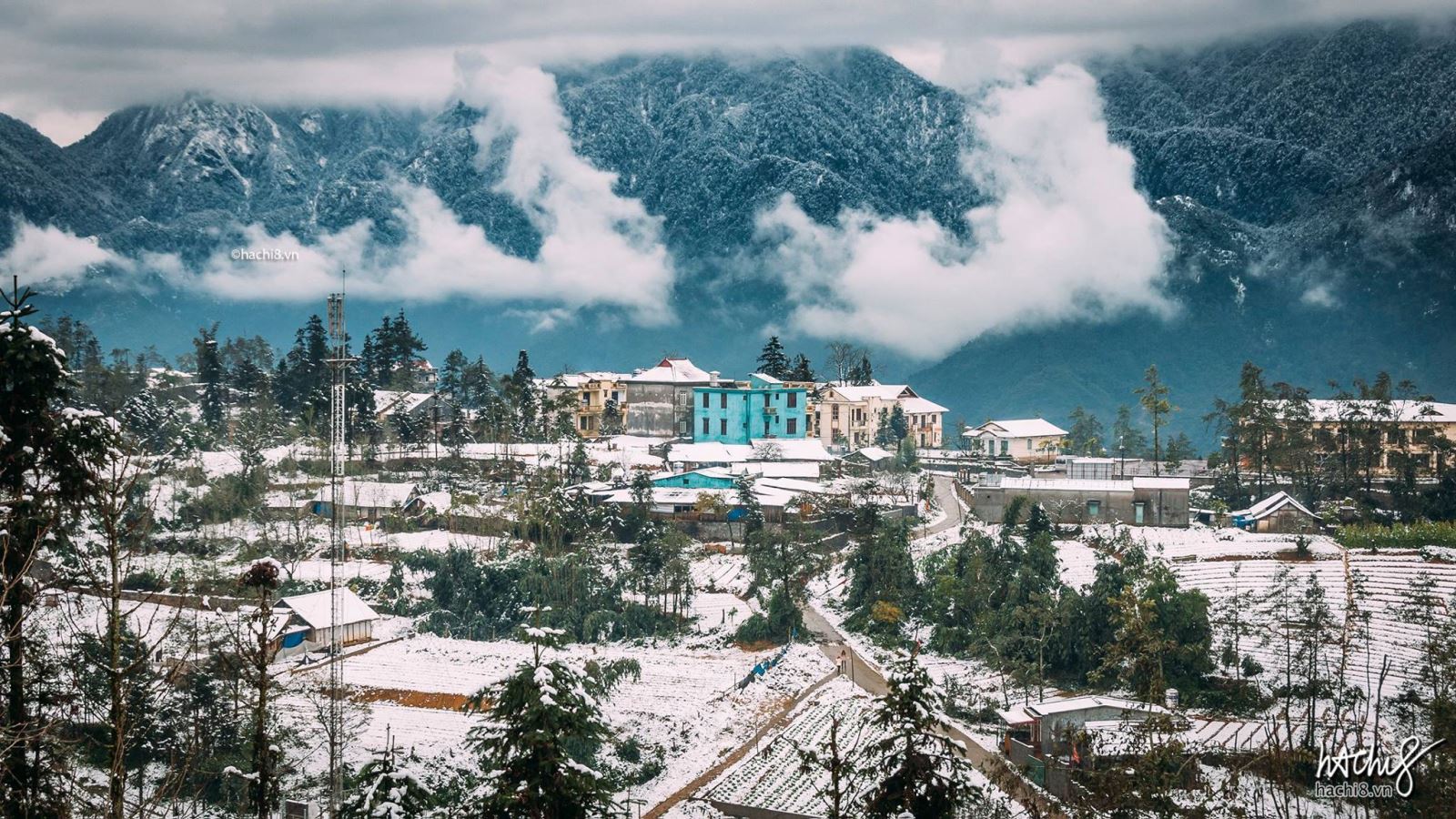
Northern Vietnam, best represented by Hanoi, falls under a humid subtropical climate (Cwa). Unlike the rest of Vietnam, the north has four relatively distinct seasons — hot, humid summers and cool, dry winters — shaped by cold winds from Siberia sweeping down through China.
Hanoi’s summer averages around 30°C, while winter temperatures drop to around 18°C — making the north the most seasonally varied part of Vietnam.
Key characteristics of the northern climate:
- Four relatively distinct seasons
- Hot and humid summers with concentrated rainfall (June–September)
- Cool and dry winters
Regional differences within the north
Even within the north, temperatures vary significantly depending on where you are.
- Ha Long Bay: Set on open water, Ha Long Bay tends to feel cooler than Hanoi due to sea breezes — particularly in winter, when it can get quite cold on boat cruises.
- Sa Pa: At 1,600 meters above sea level, Sa Pa stays cool year-round. Temperatures can drop below freezing in winter (December–January), with occasional frost or snow. Warm layers are essential.
Best time to visit northern Vietnam
Spring (March–April) and autumn (October–November) offer the most pleasant conditions — mild temperatures and relatively little rain.
Hanoi monthly temperature and rainfall (2021–2024 average)
Monthly climate data for Hanoi based on the past three years:
| Month | Avg Temp (°C) | Min Temp (°C) | Max Temp (°C) | Rainfall (mm) | Rainy Days |
|---|---|---|---|---|---|
| January | 17.8 | 15.3 | 20.7 | 42 | 1 |
| February | 18.2 | 16.0 | 20.7 | 19 | 0 |
| March | 22.1 | 19.6 | 25.1 | 39 | 1 |
| April | 25.5 | 22.9 | 28.8 | 47 | 1 |
| May | 27.6 | 24.5 | 31.5 | 182 | 6 |
| June | 29.9 | 26.6 | 33.9 | 309 | 10 |
| July | 30.0 | 26.6 | 34.1 | 247 | 8 |
| August | 29.2 | 26.1 | 33.2 | 389 | 12 |
| September | 28.5 | 25.5 | 32.5 | 434 | 13 |
| October | 26.5 | 23.0 | 30.6 | 110 | 4 |
| November | 24.4 | 20.9 | 28.5 | 69 | 2 |
| December | 18.4 | 15.3 | 21.6 | 13 | 0 |
Central Vietnam: A Long Dry Season and a Short, Intense Wet Season (Da Nang, Hoi An)
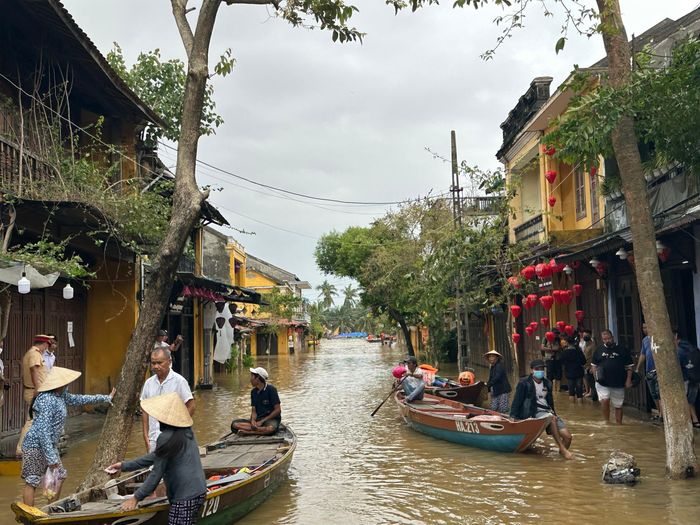
Central Vietnam — represented by Da Nang and Hoi An — falls under a tropical monsoon climate (Am). It is warm year-round, but the defining feature is a sharp contrast between a long dry season (roughly January to August) and a short but intense wet season (September to December).
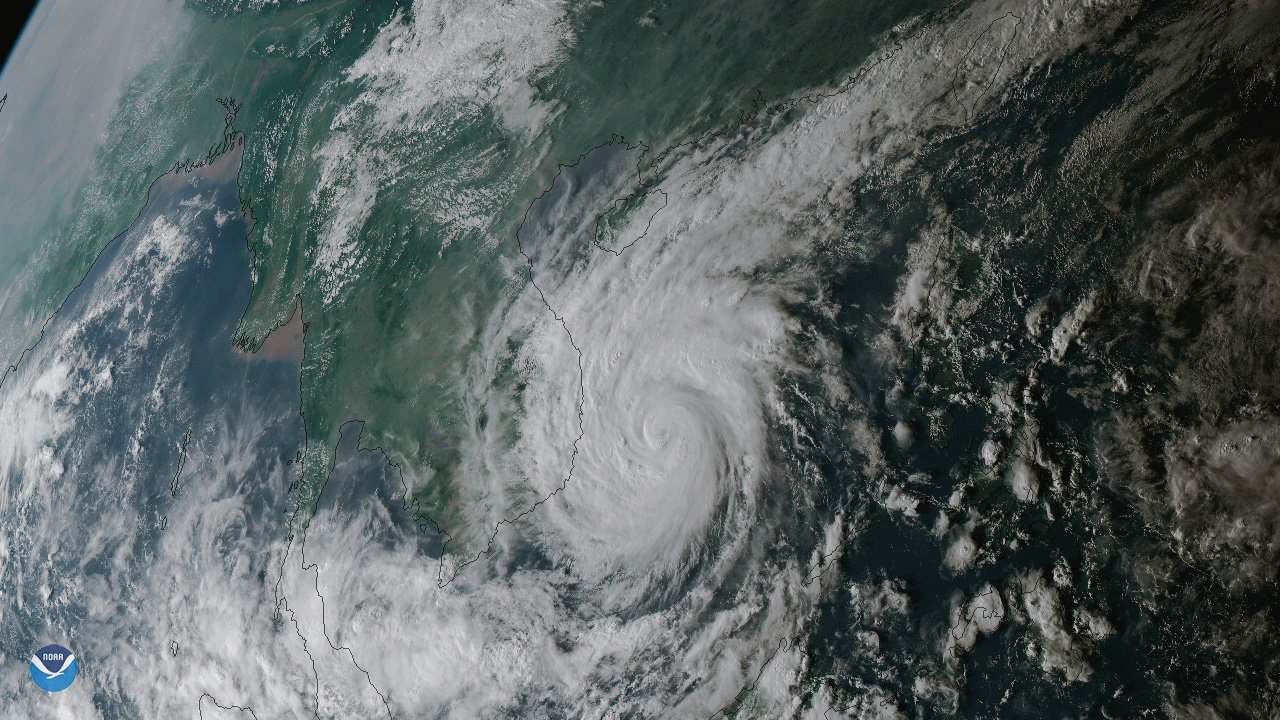
The central region receives the bulk of its annual rainfall in just a few months. During the wet season, typhoons can push through, bringing heavy downpours. The annual average temperature sits around 26–27°C.
- Clear dry and wet seasons (dry: roughly January–August / wet: roughly September–December)
- Warm year-round
- Heavy rainfall concentrated in October–November, with typhoon risk
Best time to visit central Vietnam
The dry season from February to May is the best time to visit. Skies are clear, humidity is lower, and beach conditions are ideal. Avoid September to November if possible — typhoon risk is highest then, and Hoi An’s Old Town floods regularly during these months.
Da Nang / Hoi An monthly temperature and rainfall (2021–2024 average)
| Month | Avg Temp (°C) | Min Temp (°C) | Max Temp (°C) | Rainfall (mm) | Rainy Days |
|---|---|---|---|---|---|
| January | 22.4 | 20.2 | 25.6 | 98 | 2 |
| February | 23.5 | 21.5 | 26.5 | 45 | 1 |
| March | 25.4 | 22.7 | 29.1 | 30 | 1 |
| April | 27.5 | 25.0 | 31.6 | 133 | 1 |
| May | 29.0 | 26.0 | 33.4 | 131 | 3 |
| June | 30.5 | 26.6 | 35.8 | 60 | 1 |
| July | 29.8 | 26.5 | 34.2 | 120 | 3 |
| August | 30.0 | 26.2 | 35.0 | 101 | 3 |
| September | 28.8 | 25.6 | 33.0 | 396 | 6 |
| October | 26.5 | 24.2 | 29.5 | 1218 | 12 |
| November | 25.8 | 23.4 | 28.7 | 502 | 8 |
| December | 22.7 | 20.9 | 25.2 | 359 | 8 |
South-Central Vietnam: A Long Dry Season Perfect for Beach Travel (Nha Trang)
Nha Trang shares a tropical climate with Da Nang, but its wet season arrives later (mainly October to December) and is shorter. This means a longer dry season — January through August — making it one of the most reliable beach destinations in Vietnam for most of the year.
Nha Trang monthly temperature and rainfall (2021–2024 average)
| Month | Avg Temp (°C) | Min Temp (°C) | Max Temp (°C) | Rainfall (mm) | Rainy Days |
|---|---|---|---|---|---|
| January | 25.0 | 22.5 | 27.6 | 84 | 2 |
| February | 25.7 | 23.2 | 28.5 | 21 | 1 |
| March | 26.8 | 23.8 | 30.3 | 32 | 1 |
| April | 28.5 | 25.6 | 31.8 | 46 | 1 |
| May | 29.5 | 26.7 | 33.0 | 105 | 3 |
| June | 29.6 | 26.8 | 33.3 | 42 | 2 |
| July | 29.1 | 26.3 | 32.6 | 77 | 2 |
| August | 29.5 | 26.6 | 33.3 | 83 | 2 |
| September | 28.9 | 25.9 | 32.5 | 130 | 4 |
| October | 27.6 | 24.9 | 30.6 | 264 | 5 |
| November | 26.9 | 24.5 | 29.4 | 245 | 5 |
| December | 25.5 | 23.4 | 27.6 | 300 | 6 |
Southern Vietnam: Summer All Year, with Afternoon Downpours (Ho Chi Minh City)
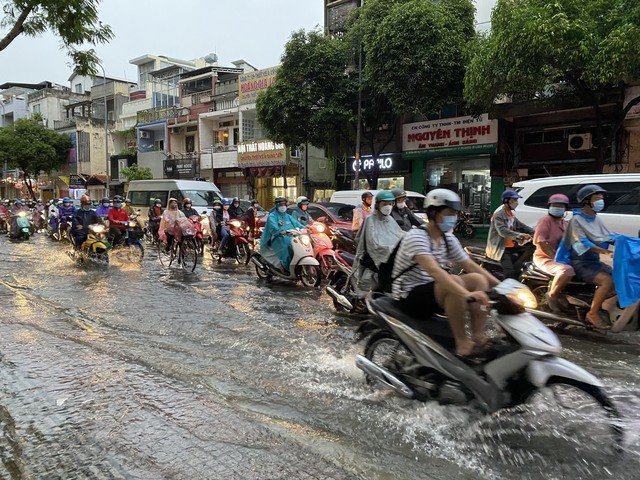
Southern Vietnam — centered on Ho Chi Minh City — has a classic tropical savanna climate (Aw). In simple terms, it is summer all year. The region divides into a dry season (roughly December to April) and a wet season (roughly May to November).
The wet season here is different from the central region. Rather than concentrated monthly downpours, the south gets short, heavy rain showers — squalls — almost every afternoon. These squalls are intense but short and fairly predictable — schedule outdoor activities in the morning and you will rarely be caught off guard.
- Distinct dry season (roughly December–April) and wet season (roughly May–November)
- Hot and humid year-round, averaging 28–29°C
- Wet season brings short, intense afternoon squalls almost daily
Best time to visit southern Vietnam
The dry season from December to April is the most comfortable time to visit. Humidity is lower and rain is rare. During the wet season, a compact umbrella or light rain jacket goes a long way.
Ho Chi Minh City monthly temperature and rainfall (2021–2024 average)
| Month | Avg Temp (°C) | Min Temp (°C) | Max Temp (°C) | Rainfall (mm) | Rainy Days |
|---|---|---|---|---|---|
| January | 27.8 | 24.0 | 32.7 | 28 | 1 |
| February | 28.8 | 24.8 | 34.1 | 4 | 0 |
| March | 29.2 | 25.5 | 34.6 | 2 | 0 |
| April | 30.5 | 27.2 | 35.2 | 22 | 0 |
| May | 30.0 | 26.8 | 34.6 | 161 | 7 |
| June | 29.2 | 25.9 | 33.7 | 284 | 14 |
| July | 28.2 | 25.4 | 32.2 | 371 | 17 |
| August | 28.8 | 25.8 | 33.3 | 227 | 8 |
| September | 28.0 | 25.2 | 32.0 | 332 | 16 |
| October | 27.9 | 24.8 | 32.2 | 320 | 14 |
| November | 28.2 | 25.0 | 32.5 | 141 | 4 |
| December | 27.7 | 24.0 | 32.1 | 44 | 1 |
Light, breathable clothing is appropriate year-round in the south. Air conditioning indoors can be strong, so a light layer is worth carrying. The lowest temperature ever recorded in Ho Chi Minh City is 13.9°C, though this is extremely rare.
What to Pack for Vietnam by Region and Season
Vietnam’s regional climate differences make packing choices important. Here is a practical guide by region.
Northern Vietnam (Hanoi, Ha Long Bay, Sa Pa)
- Spring / Autumn (March–April, October–November): Light long sleeves, t-shirts, a jacket or cardigan
- Summer (May–September): T-shirts, shorts, breathable fabrics, sunscreen, hat, sunglasses, umbrella or rain jacket for the wet season
- Winter (December–February): Long sleeves, sweater, light down jacket or warm coat, scarf — especially for areas north of Hanoi
- Sa Pa specifically: Bring warm layers regardless of season. In winter, a heavy coat, gloves, and a hat are essential.
Central Vietnam (Da Nang, Hoi An, Nha Trang)
- Dry season (January–August): T-shirts, shorts, swimwear, sunscreen, sunglasses, hat, light layer for air conditioning
- Wet season (September–December): Summer clothes plus umbrella, waterproof bag, water-resistant footwear or sandals, light rain jacket
Southern Vietnam (Ho Chi Minh City, Mekong Delta)
- Year-round: Light, breathable cotton clothing (t-shirts, shorts), sunscreen, sunglasses, hat
- Wet season (May–November): Add a compact umbrella, waterproof sandals or shoes, waterproof bag
Useful for all regions:
- Insect repellent, especially for evenings and nature areas
- Portable fan if you are sensitive to heat
- Power bank
Vietnam’s climate is varied, but with the right preparation, any region is worth visiting at any time of year. Understanding the seasonal patterns for each region helps you pack right and make the most of your time in Vietnam.
![How to Get from Ho Chi Minh City (Saigon) to Vung Tau [2026]](https://cms-en.vietnamguide.co.kr/wp-content/uploads/2023/05/1080px-Samco_Primas_sleeper_bus_in_Vietnam-edited.jpg)
![Best Area to Stay in Da Nang: Neighborhood & Hotel Guide [2026]](https://cms-en.vietnamguide.co.kr/wp-content/uploads/2026/05/다낭-호텔-아고다-설명.jpg)
![Phu Quoc Packing List: What to Wear & Travel Essentials [2026]](https://cms-en.vietnamguide.co.kr/wp-content/uploads/2026/05/베트남-푸꾸옥.jpg)