When you think of a traditional hat, it might sound like something reserved for special occasions — but not in Vietnam. The Non La, Vietnam’s iconic conical hat, is still a common sight across the entire country. Street vendors in the cities and farmers in the countryside rely on it every day, and it remains one of the most recognizable symbols of Vietnam abroad — often seen paired with the traditional Ao Dai dress.

The Name and Meaning of the Non La
The name “Non La” comes from two Vietnamese words: non (hat) and la (leaf) — literally a “leaf hat.” In Vietnam’s hot, rainy climate, it serves a simple but essential purpose: blocking intense sunlight and providing shelter from sudden downpours.
Production is spread across the country. Well-known hat-making areas include Cu Chi in the south, Hue in the central region, and Chuong village near Hanoi and Nam Dinh province in the north.

A Long History
Pinning down the exact origins of the Non La is difficult. Similar conical hats were used throughout Southeast Asia and beyond — anywhere rice was cultivated. Korea had its Satgat, and Japan had its own traditional leaf-woven hats. This style of hat was never unique to Vietnam alone.
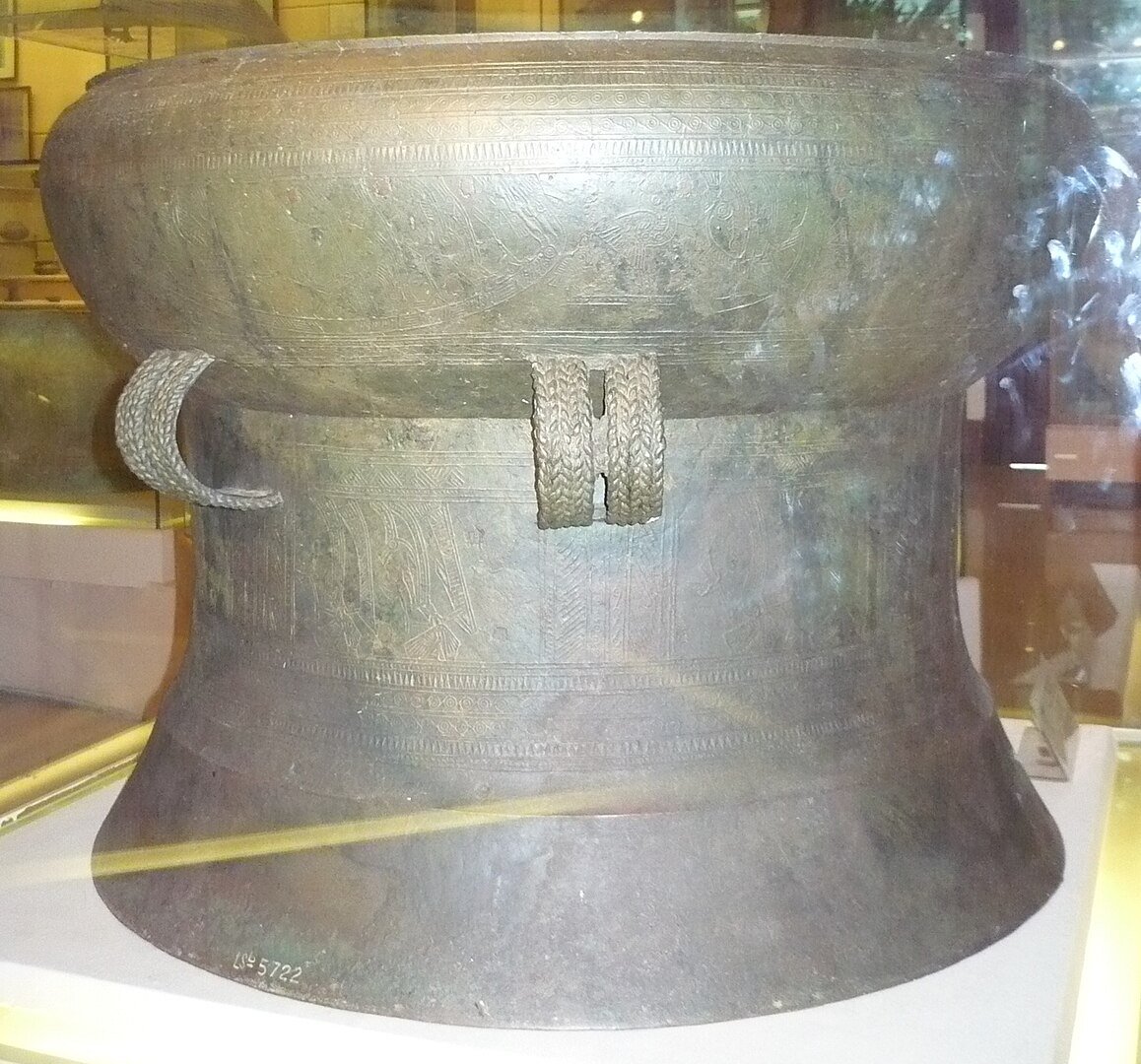
That said, figures depicted on the Ngoc Lu bronze drum (c. 500–300 BCE), unearthed in Vietnam, are interpreted by some scholars as wearing an early form of the Non La — suggesting that a similar hat has existed in the region for at least 2,000–2,500 years.
The cone-shaped form we recognize today is believed to have emerged during the Tran Dynasty (13th–14th century), originating in Ma Loi village in what is now the Hai Phong area — a port city roughly 120 km east of Hanoi. At the time, it was primarily a luxury item worn by the nobility.
How the Non La Is Made
There are no fixed rules for what materials a Non La must use — makers work with whatever is locally available. The most common version uses a bamboo frame covered with palm, coconut, or other broad leaves depending on the region. The result is a lightweight, breathable hat that has served Vietnamese people for centuries.
Vietnam’s national broadcaster VTV documented the process in a short film. You can watch it below.
How Much Does a Non La Cost?
Prices vary widely depending on the maker, materials, size, and design. A plain everyday Non La sold on the street typically costs between 50,000 and 100,000 VND. More elaborate versions — embroidered, hand-painted, or lined with silk — are sold in gift shops and souvenir stores, and can run into the hundreds of thousands of dong.
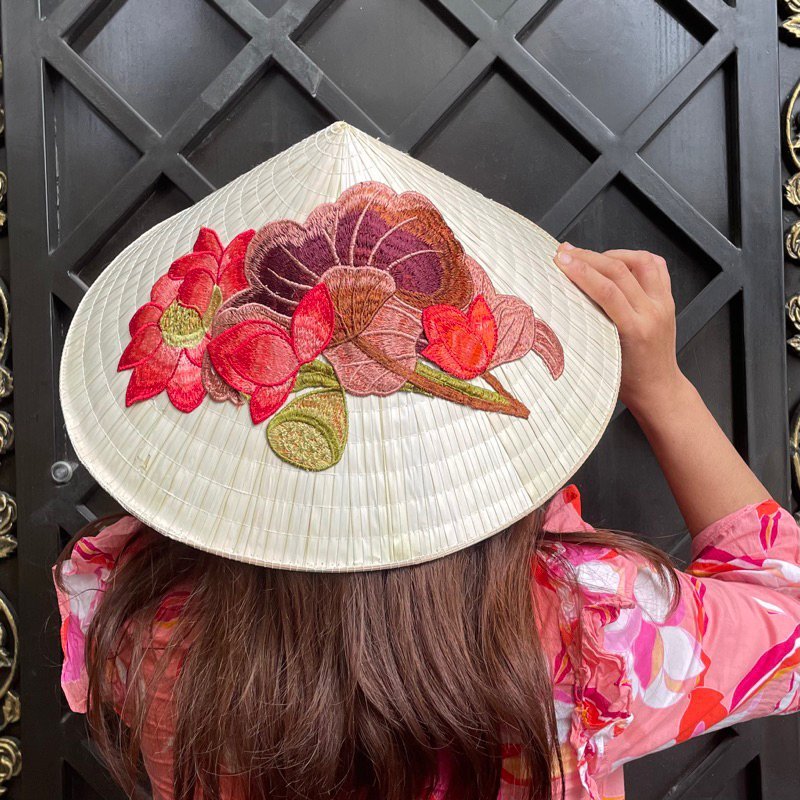
Special varieties include:
- Embroidered Non La
- Hand-painted Non La
- Silk-lined Non La
Where can I buy a Non La?
Non La hats are easy to find almost anywhere in Vietnam. In tourist areas, vendors often walk around selling them directly. You’ll pay a slight premium compared to a market, but there’s no need to go out of your way.
Places to buy:
– Street stalls
– Local markets
– Souvenir shops
– Online
Can I bring a Non La back home?
A Non La makes a memorable souvenir, but its size is the main challenge. A full-sized adult hat won’t fit in a carry-on suitcase — you’ll need to carry it separately and store it in the overhead bin. On a full flight, cabin crew may ask you to move it.
Checking it in a large suitcase is an option, but it will take up more than half your suitcase. It’s doable, but worth thinking through before you buy.


![How to Get from Ho Chi Minh City (Saigon) to Vung Tau [2026]](https://cms-en.vietnamguide.co.kr/wp-content/uploads/2023/05/1080px-Samco_Primas_sleeper_bus_in_Vietnam-edited.jpg)
![Best Area to Stay in Da Nang: Neighborhood & Hotel Guide [2026]](https://cms-en.vietnamguide.co.kr/wp-content/uploads/2026/05/다낭-호텔-아고다-설명.jpg)
![Phu Quoc Packing List: What to Wear & Travel Essentials [2026]](https://cms-en.vietnamguide.co.kr/wp-content/uploads/2026/05/베트남-푸꾸옥.jpg)