Hanoi’s Noi Bai International Airport is about 28 km from the city center — roughly a 40-minute drive. That distance might sound like a lot, but once you are in the right neighborhood, Hanoi is a surprisingly easy city to get around.
Nearly all of Hanoi’s main attractions sit within a compact area centered on the Imperial Citadel of Thăng Long — north, south, east, and west. Any hotel in this zone puts you within reasonable reach of everything.
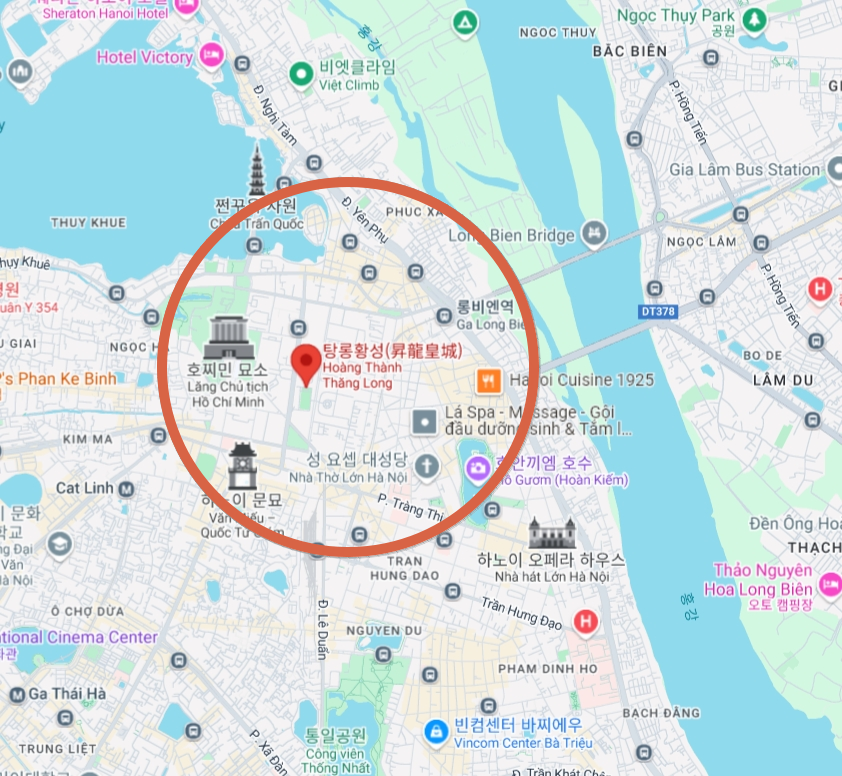
The farthest points in the city — Tran Quoc Pagoda and the Hanoi Opera House — are about 17 minutes apart by Grab, costing around $1.50 one way. Most trips within this area run under $1.20.
That compact size means your choice of neighborhood in Hanoi is genuinely flexible — there is no single “right” area, and the tradeoffs between them are real but manageable.
This guide covers the main areas where travelers stay in Hanoi, with honest notes on what each one is actually like.
How Hanoi Neighborhoods Are Defined
Before getting into each area, it helps to know that neighborhood names in Hanoi are based on the district classifications used by booking platforms like Agoda. When you filter by location on Agoda, these are the district names you will see — and they do not always match what locals call each area.
On Agoda, you can filter results by district and then browse hotels within that specific area. It is worth using this filter before booking rather than relying on the hotel’s description of its own location.
Hoan Kiem
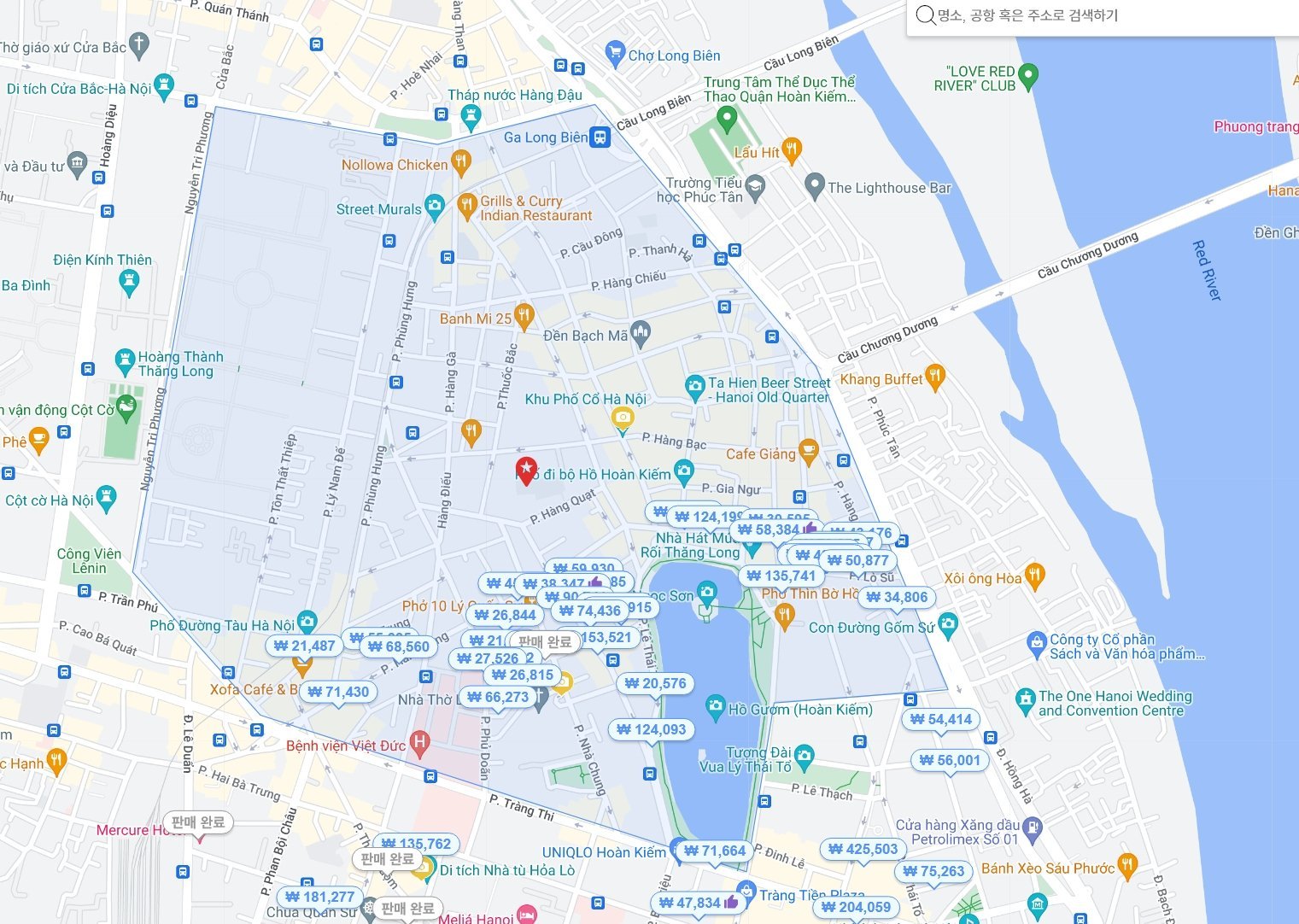
Hoan Kiem is the large lake just south of the Old Quarter — one of Hanoi’s most iconic landmarks. The district that surrounds it shares the same name. This is also a personal favorite — and for good reason.
It is close enough to walk to the Old Quarter in 10 to 15 minutes, but noticeably quieter and less chaotic. If eating well, exploring, and having a drink in the evening matter to you, staying near Hoan Kiem Lake — on the north or west side — is worth prioritizing. You are also within easy reach of familiar chain restaurants and cafes (Starbucks, Haagen-Dazs, McDonald’s), which is useful if you are new to Vietnam.
After a night out in the Old Quarter, the 1 km walk back is manageable — though after a few drinks, it tends to feel longer than it looks on the map.
Tour pickups and transport options also work well from this area, so you still get full access to Old Quarter tours and transport without actually staying there.
Hanoi Old Quarter
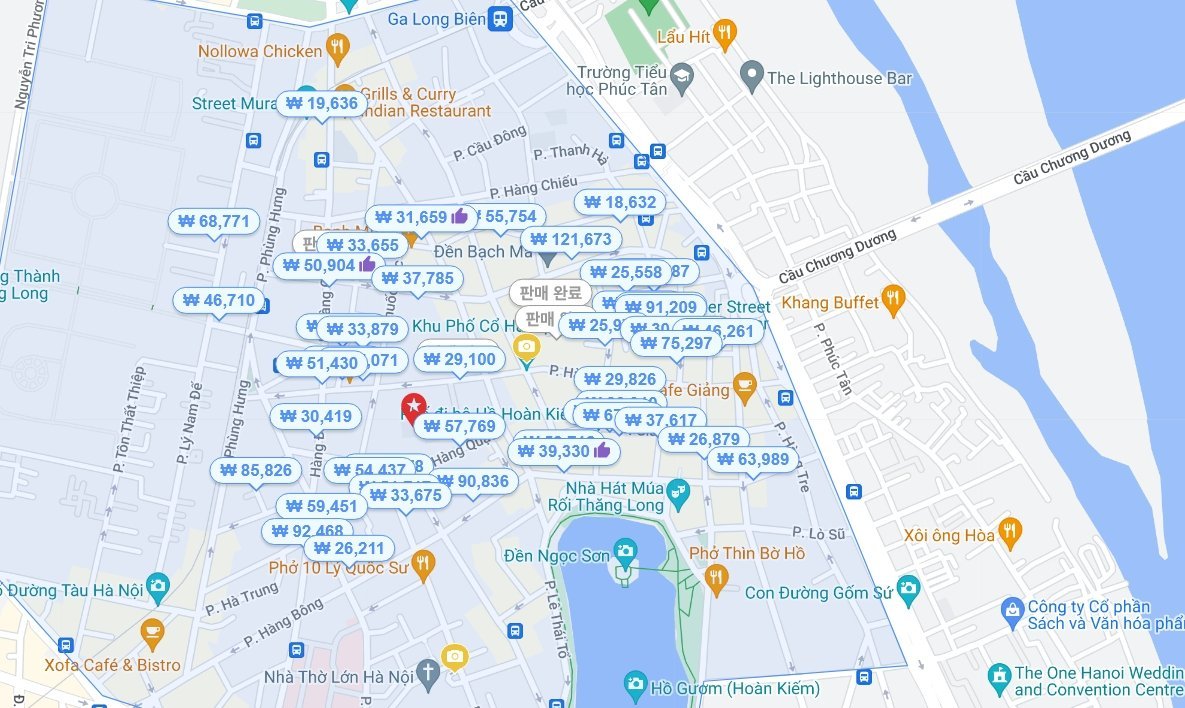
The Old Quarter is where most visitors want to be. It is the starting point for nearly all tours out of Hanoi — Ha Long Bay, Ninh Binh, and others — and it is packed with restaurants, bars, ATMs, pharmacies, convenience stores, and travel agencies.
Unlike the “traveler streets” found in other Vietnamese cities, which are usually just one or two blocks, Hanoi’s Old Quarter is large enough to be its own district. This also means that where exactly your hotel sits within the Old Quarter makes a significant difference in how convenient and accessible everything feels.
Two things to check carefully before booking here:
- Noise
- Exact location
Vietnam’s building construction is generally thin-walled, and noise complaints appear in reviews across the board — not just in the Old Quarter. But this area in particular draws large crowds late into the night, and some spots are loud enough to make sleep genuinely difficult. If you are booking in the Old Quarter, check reviews specifically for noise complaints. If a hotel has multiple recent mentions of noise, skip it.
On location: very cheap hotels are sometimes tucked into narrow alleyways, which can be hard to find on arrival — especially at night. There is no one to call for help, and the address may not show up clearly on Google Maps. If the price seems unusually low, verify the exact location on the map before booking.
Tay Ho (West Lake)
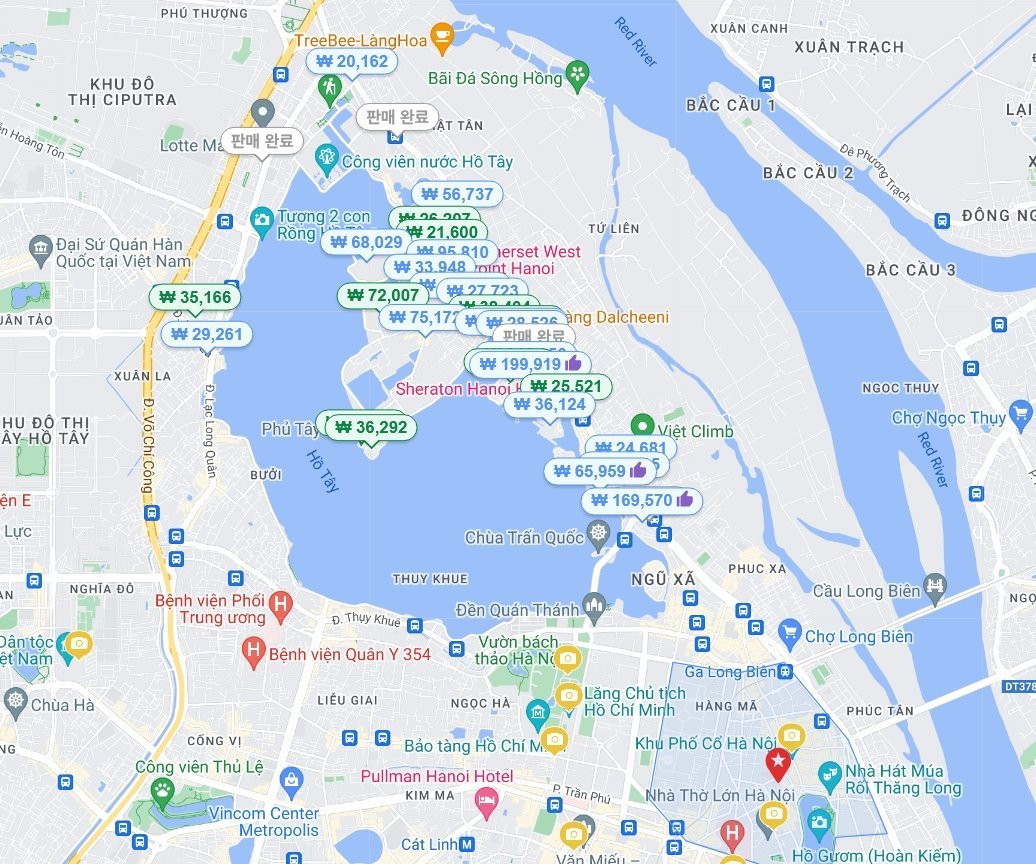
Tay Ho — or West Lake — is the large lake on Hanoi’s northwestern side. Agoda lists it under the Vietnamese pronunciation “Tay Ho,” but it refers to the same area. Hotels here tend to be upscale, often with lake views, and the neighborhood is significantly quieter than the Old Quarter.
The tradeoff is access. Tay Ho is relatively close to the airport, but it sits north of the city center, which means getting to most of Hanoi’s main sights requires a Grab. Tran Quoc Pagoda is walkable from here — most other attractions are not. Budget around 10 minutes to the Old Quarter and 15 minutes to Ho Chi Minh Mausoleum by Grab.
Ba Dinh
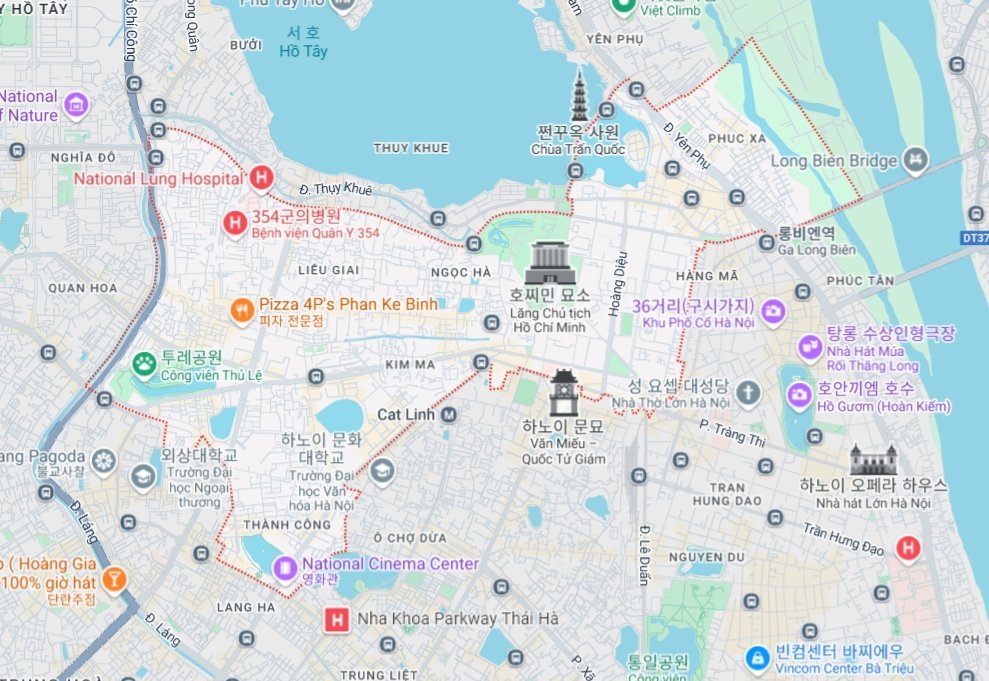
Ba Dinh is one of Hanoi’s largest districts, covering roughly half the city. It has the highest number of hotels listed on Agoda — but that size is exactly why you need to be selective about where within Ba Dinh you book.
The reason Ba Dinh is worth mentioning at all is Truc Bach (Trúc Bạch) — a smaller area within Ba Dinh, just south of West Lake across a single street. Think of it as a more accessible version of Tay Ho: quieter than the Old Quarter, with better transport links than the deeper parts of West Lake.
If you choose Ba Dinh on a booking platform, filter for hotels near the Thang Long Imperial Citadel or near Truc Bach Lake. Hotels on the western edge of Ba Dinh are significantly further from everything.
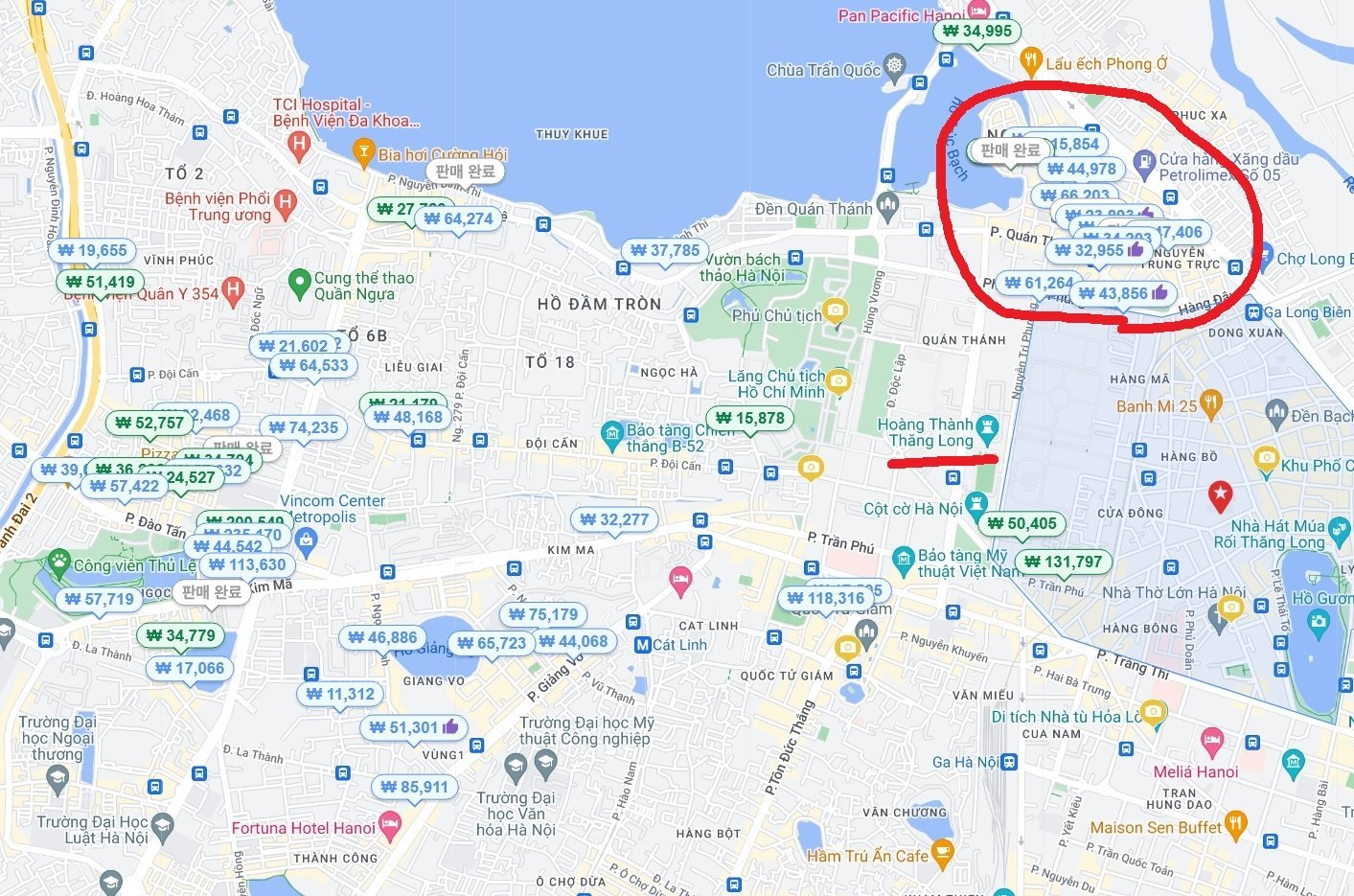
Pick a hotel in the Truc Bach area specifically, or — if staying elsewhere in Ba Dinh — choose one that is not far from the Thang Long Imperial Citadel.
The western edge of Ba Dinh has a Korean expat community concentrated in the My Dinh (Mỹ Đình) area. Unless you have a specific reason to be there, it is far enough from the main sights that there is no reason to base yourself there as a visitor.

![How to Get from Ho Chi Minh City (Saigon) to Vung Tau [2026]](https://cms-en.vietnamguide.co.kr/wp-content/uploads/2023/05/1080px-Samco_Primas_sleeper_bus_in_Vietnam-edited.jpg)
![Best Area to Stay in Da Nang: Neighborhood & Hotel Guide [2026]](https://cms-en.vietnamguide.co.kr/wp-content/uploads/2026/05/다낭-호텔-아고다-설명.jpg)
![Phu Quoc Packing List: What to Wear & Travel Essentials [2026]](https://cms-en.vietnamguide.co.kr/wp-content/uploads/2026/05/베트남-푸꾸옥.jpg)